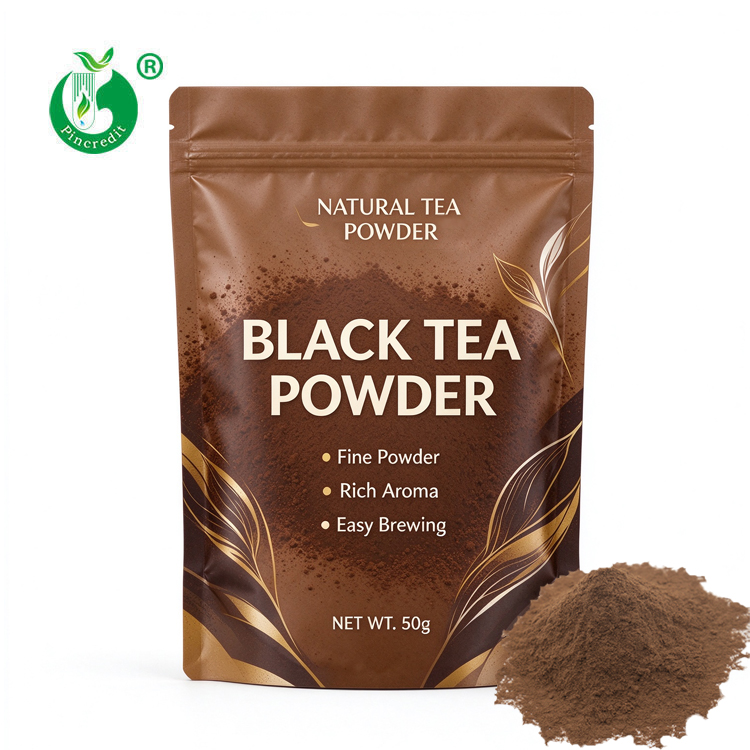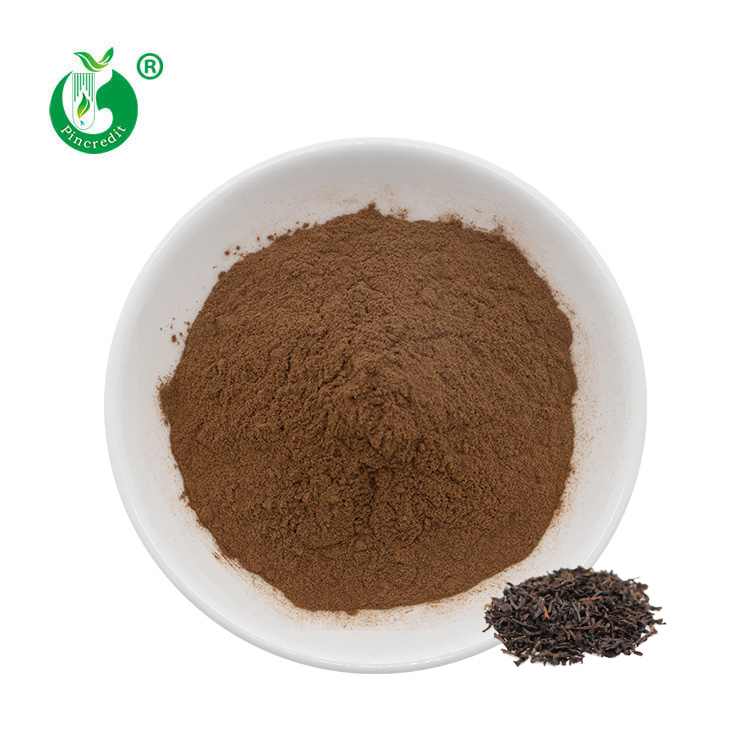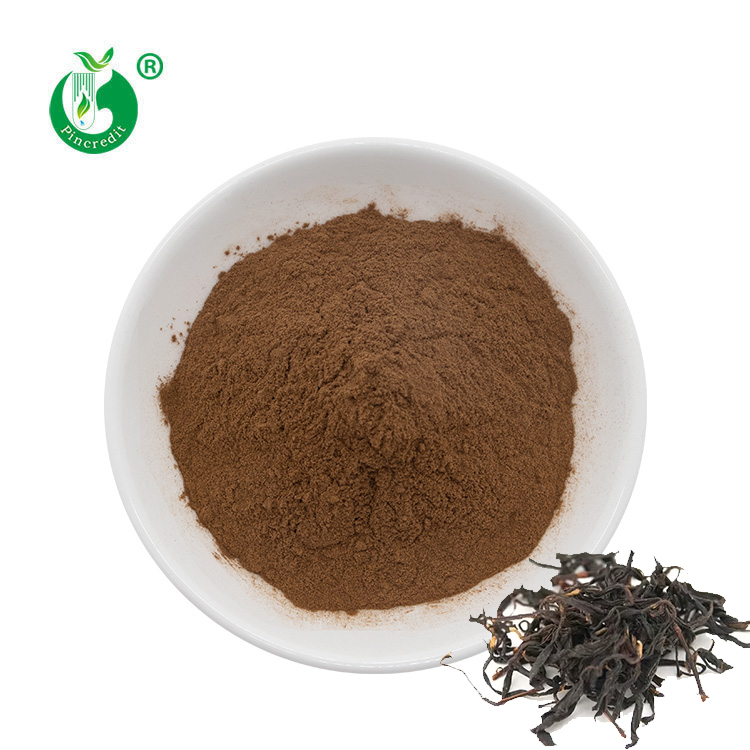
Pincredit Supply Instant Black Tea Powder in Bulk
Instant Soluble
Get a Quote
Explore commercial grade active ingredients, instant micro-powders, and verified botanical precursors ready for OEM specification adaptation.
Seed matrices are evolutionary reservoirs containing dense protective phytochemicals, phytosterols, lignans, polyphenols, and essential fatty acid complexes. Sourcing raw seed extracts requires specialized separation technologies to ensure active biological stabilization without toxic chemical carrier retention.
Standardized to 95% Oligomeric Proanthocyanidins (OPC) and polyphenols via aqueous-ethanolic countercurrent extraction. Characterized by HPLC-GPC to ensure defined distribution between monomers (catechin, epicatechin) and oligomers for cardiovascular, collagen protection, and vascular endothelial elasticity formulations.
Engineered to deliver 80% Total Silymarin by UV / 30%–65% Silybin + Isosilybin by HPLC. Our defatted seed fractionation isolates active flavanolignans while maintaining low residual solvent parameters (USP <467> compliant), essential for pharmaceutical hepatoprotective therapeutics and detox dietary lines.
Standardized up to 98% L-5-Hydroxytryptophan (HPLC) from wild-crafted Griffonia simplicifolia seeds. Produced with strict chromatographic purification eliminating Peak X impurities, ensuring rapid crossing of the blood-brain barrier for neurological, mood homeostasis, and circadian regulation supplements.
Enterprise procurement departments are transitioning from raw cost-per-kilogram transactions to holistic risk mitigation, lifecycle sustainability, and validated analytical verification.
Global brands no longer tolerate blind brokered botanicals. Direct agricultural traceability down to regional cooperatives (such as Shaanxi herbal corridors) safeguards procurement pipelines against geopolitical volatility, climate-induced crop failures, and adulteration with unverified seed pomace fractions.
Import authorities in the EU, US, and APAC have heightened scrutiny regarding pesticide residues (BS EN 15662 multi-residue panels), ethylene oxide (EtO), polycyclic aromatic hydrocarbons (PAH4), and pyrrolizidine alkaloids. Forward contracts now mandate batch-level compliance pre-shipment.
Chlorinated hydrocarbons and toxic organic extraction solvents are being phased out in consumer healthcare. Tier-1 brands are transitioning purchase orders strictly toward certified supercritical CO2 fluid extraction and water-ethanol matrices yielding residue-free extracts that meet EU Organic and USDA NOP requirements.
Raw plant matrices inherently present formulation obstacles: lipophilic resin insolubility, intense bitterness, heat degradation, and poor physiological bioavailability. Our factory integrates next-generation bioprocess engineering to overcome these bottlenecks.
By adjusting pressure and temperature beyond critical thermodynamic points, our closed-loop extraction processes selectively fractionate sensitive seed lipids and phenolic esters without thermal degradation, avoiding residual hexane or petroleum ether.
Lipophilic seed extracts (such as Pumpkin Seed Sterols and Astaxanthin) undergo spray-chilling or phospholipid microencapsulation. This converts hydrophobic oils into freely cold-water-dispersible, free-flowing dry powders with 400% improved intestinal permeation.
Utilizing high-surface macroporous polymeric resin columns, our purification process purges residual tannins, heavy metal ions, and inactive sugars, concentrating specific marker monomers to achieve up to 99% pure standardized assay.
Mechanical shear under liquid nitrogen chilling prevents heat destruction of volatile components, producing uniform microparticulate sizing suitable for high-speed tablet compression, clear sachet dissolution, or seamless capsule loading.
Every commercial batch produced in our facilities passes an analytical release battery. Use this benchmark when evaluating technical datasheets across global manufacturers.
| Analytical Parameter | Release Methodology | Standard Global Specification | Procurement Risk Mitigated |
|---|---|---|---|
| Active Marker Assay | HPLC-DAD / UHPLC / UV-Vis | Standardized per target (e.g. 95% OPC, 80% Silymarin) | Prevents botanical spiking with cheap synthetic catechins or non-specific chromophores. |
| Pesticide Multi-Residues | GC-MS/MS & LC-MS/MS (BS EN 15662) | < Limit of Quantitation (LOQ), EU 396/2005 compliant | Guarantees entry clearance across stringent European and North American customs without rejection. |
| Heavy Metals (Pb, As, Cd, Hg) | ICP-MS (Inductively Coupled Plasma) | Pb <3.0 ppm, As <1.0 ppm, Cd <1.0 ppm, Hg <0.1 ppm | Preempts California Proposition 65 consumer litigation and toxic organ accumulation hazards. |
| Residual Solvents | Headspace Gas Chromatography (GC-HS) | USP <467> / EP 5.4 Class 2 & 3 criteria; Ethanol <5000 ppm | Eliminates carcinogenic organic solvent traces from inferior chemical extraction runs. |
| Microbiological Profile | USP <2021> / <2022> BAM Standards | TPC <1000 CFU/g, Y&M <100 CFU/g, Salmonella / E. Coli Negative | Protects end-user formulations from contamination, degradation, and rapid spoilage. |
| Particle Size & Bulk Density | Laser Diffraction (Malvern Mastersizer) | 80 Mesh to 450 Mesh pass rate >95%; 0.40–0.65 g/mL | Prevents segregation, caking, and filling variation during automated encapsulation or tableting. |
Rooted in the botanical capital of Shaanxi since 2014, we combine natural raw material sourcing with certified cleanroom contract manufacturing.
Our extraction lines and cleanrooms hold official on-site verification assessments by SGS. We serve global brands in over 30 countries and are trusted contract suppliers to Fortune 500 nutritional enterprises.
Fully compliant with global market requirements holding ISO 22000, HACCP, Halal, Kosher, USDA Organic, and EU Organic certifications. Every lot is supported by full analytical dossiers including BS EN 15662 testing and IMDG/IATA DGR logistics safety classifications.
Our research pipeline holds registered intellectual property, including Invention Patent ZL 2014 1 0464649.9 (specialized active botanical extraction) and Utility Model Patent No. 14520048 for advanced botanical extraction equipment.
We eliminate enterprise barriers. Whether you are conducting pilot R&D trials requiring 1 kg of reference extract or commercial scale campaigns exceeding 50 metric tons, our 25 audited partner plants ensure seamless scalability.
Beyond raw ingredients, we engineer shelf-ready private label products: custom dry blending, granulation, pouching, metal tin filling, capsule encapsulation, and tamper-evident packaging customized to your brand book.
Supporting versatile incoterms including FOB, CFR, CIF, EXW, FCA, and full door-to-door cleared DDP. Multicurrency settlement available in USD, EUR, GBP, CAD, AUD, JPY, CHF, HKD, and CNY via secure global payment rails.
Key technical, regulatory, and commercial queries addressed by our compliance engineering team.
Standard catalog extracts and powders start from as low as 1 kg for formulation benchmarking. Bespoke OEM extractions, customized mesh sizes (e.g. 450 mesh), or specialized liposomal preparations typically begin at 25 kg to 100 kg depending on raw seed lot parameters.
We deploy high-performance size-exclusion chromatography (HPLC-GPC) alongside traditional UV Porter methods. This differentiates true oligomeric proanthocyanidins from peanut skin extract adulterants or free monomeric catechins, verifying authentic molecular weight distribution.
Each delivery includes a batch-specific Certificate of Analysis (COA) containing assay, microbials, and heavy metals. We also provide Allergen Declarations, Non-GMO Statements, Flowcharts, TSE/BSE Certificates, Safety Data Sheets (MSDS), and third-party SGS pesticide test reports upon request.
Yes. While maltodextrin is common, we frequently manufacture clean-label seed extracts using certified organic acacia gum (gum arabic), cassava tapioca starch, or completely carrier-free native spray-dried formats for 100% pure label declarations.
We perform Headspace Gas Chromatography (GC-HS) strictly adhering to United States Pharmacopeia (USP <467>) and European Pharmacopoeia (EP 5.4) Class 2 and Class 3 guidelines, guaranteeing complete absence of non-approved volatile hydrocarbons.
We provide qualified research, product development, and quality assurance teams with 20g to 100g bench testing samples alongside lot-matched analytical documentation, allowing you to confirm solubility, color, bulk density, and organoleptic parameters before issuing commercial POs.
Consult with our bioprocess engineers to request specification dossiers, pilot samples, and tailored contract manufacturing proposals within 24 hours.
Get a Quote